"Awake, sleeper, And arise from the dead, And Christ will shine on you." - Paul
"You had a dream. You misunderstood. You thought we were separate but now you hear my voice and you can relax now. Come on and open your eyes." (You Can Relax Now by Shaina Noll)
Thursday, November 04, 2010


Same Vocabulary, Different Dictionary

I've visited many cultures and countries around the world in the past twenty years. One of the things I learned early on in my interaction with people in other places is that words have different meanings in different cultural contexts. I've committed a faux pas more than a few times when I've spoken in other countries by saying a word that meant something very different to my listeners than it did to people in my country. I'd give a few examples now but can't because, though the words wouldn't mean anything bad in the United States, people in other places would most surely be offended. (I've even made a blunder in Canada!) So it's possible to use the same vocabulary but our understanding be very different from each other because we're not united on which definition of the word we are choosing from the dictionary.
This challenge doesn't just exist with international travel. One place it has had a huge effect on people is in studying the Bible. We read our Bibles and draw our conclusion about what what we have read based on what we understand the words there to mean. It may seem that if we just "believe what the Bible plainly says," we will have a unified understanding of the Scripture. The problem comes because of this matter of how we understand words. What the Bible "plainly says" to one person is understood in a different way by somebody else. The issue is more than what the Bible says. Each of us must interpret what it says by coming to a conclusion about what we have read means. The Bible was written in two languages originally. The Old Testament was written in Hebrew and the New Testament was written in Koine Greek, referring to the common Greek language (as opposed to a literary style Greek) of the people then. Just like in any other language, the Greek words used in the New Testament can be understood in more than one way. Sometimes the way we understand the word can make a monumental difference in our theological viewpoint.
Take for instance the biblical truth that Jesus died for all. There are numerous verses that make that claim. One might think there is very little room for differences on something as "plain" as the assertion that Jesus died for all people. But one would be wrong.
The word "all" is the Greek word pas. Paul wrote in Romans 8:32 that God "did not spare His own son, but delivered Him over for us all." Does that sound clear to you? Don't assume that everybody else understands the meaning of that verse the way you do.
Based on that verse (and others like it), some would contend that Jesus died for every person, excluding none. To them, it's clear: "All" means all. None are left out.
To others, though, the matter is not so clear cut. Their view is that Christ didn't die for every single individual but only for the elect ones chosen from the foundation of the world. They would contend that the word "all" doesn't mean every person but instead some of all types of people. In other words, He died for some for every people group in the world, but not every single individual.
If one holds the latter definition, that he died for all types of people but not every person individually, their understanding of salvation will probably best fit with those who often identify themselves as "Calvinists." (John Calvin popularized this viewpoint, although those who hold this position will quickly remind others that their view comes from the Bible, not a man named Calvin.)
Those who argue that the word "all" means everybody, without exception, will likely find themselves identifying with other non-Calvinist groups such as Arminians, Trinitarians or even Universalists.
Which is the correct use of the word? What is the definition of "all?" Everybody or some of all types? The answer is both. Here's a link to the Greek Lexicon where you can see the Greek word and its meaning: http://www.biblestudytools.com/lexicons/greek/nas/pas.html
Which group believes what the Bible says? Both do! The point of tension isn't what the Bible says, but what it means. Sincere Bible students with equal hunger for the truth can come to very different conclusions that are both based on the Bible.
There are many examples of words used in the Bible where more than one definition is possible. There is an academic discipline taught in seminaries that addresses how to study the Bible. It's called "hermeneutics" and focuses on how to interpret Scripture. One of the main principles of hermeneutics is context. It suggests that the meaning of a word should be understood in light of its context within the biblical text. Of course, the problem with that is that even trying to consider context, serious Bible students still come to different conclusions. Two opposing viewpoints can both make claim to have considered context in defining the meaning of a word and interpreting the meaning of a statement.
Over the past years my own theological views have changed in significant ways as I have reexamined various biblical texts. For much of my life my views were the fruit of an underlying perspective I held about God. My view of His nature was that He is a loving God but that His love is simply one of His characteristics to be seen among others of equal importance. That viewpoint informed my understanding about what certain things in the Bible mean.
Almost six years ago I began to realize that the love of God isn't simply one aspect of his character. It defines Him. Love is who God is, or to put it in biblical expression, "God is love" (1 John 4:8). Love is the DNA of our Triune God. Since God is pure love, everything that flows from Him must be an expression of that love. If something other than pure love were to come from God, then none could argue that He is pure love. Pure Love can do nothing but love. To do otherwise is a violation of His own nature and not possible.
This viewpoint of God as love has done much to affect how I understand the Bible. Passages that used to sound to me like they described a side of God that wasn't loving have risen to the surface so that I've had to go back and reexamine them again. I approach the Bible now with an understanding that unless I come to Love as a stopping place in my interpretation of a text, I haven't gone far enough in my study.
The result is that I now see various biblical passages and various subjects very differently than I have in the past. There are many resources available today to those who want to seriously study the Bible. However, there is a foundation upon which our understanding of the Bible will hinge. The way you see God will determine the way you understand the Bible. That fact cannot be overstated. Don't kid yourself by thinking that you or anybody else comes to the Bible from a place of absolute neutrality. We don't. We come to our Bibles with preexisting, underlying assumptions that have been forged in us by a variety of influences. Those assumptions have everything to do with how we understand what we read in the Bible.
I have come to a place where I've decided that my hermeneutic of Scripture will always stand on the premise that God is love. That is the underlying current that carries me through any and all interpretation of what the Bible means. Approaching the Scripture from that starting place has reversed some things I used to believe. It has enhanced other things. It has also introduced new things to me from the Bible.
In blogs to follow and as time permits, I intend to present various topics and truths that I see differently now than I used to understand them. The example I have given in this blog illustrates the kind of shift in my thinking that has happened to me. I used to believe the word "all" in various texts about the death of Jesus referred to some of every type. Then I began to ask how that definition lined up with a God whose DNA is love and I concluded it doesn't. So I changed my mind (repented) and began to see the matter differently. If love isn't one aspect of who God is, but if it is indeed His very essence He wouldn't die for some and leave others to have no hope. Christ died for every person. He "taste(d) death for everyone" (Hebrews 2:9).
Yes, I know there are verses that seem, on the surface, to suggest that God can be angry with man and even hate people at times. I've read the verses that seem to suggest that there are qualities He possesses that stand in contrast to love, but I've come to peace with those verses. Some of them I have come to understand to my own satisfaction. Others I haven't. But I'm not going to let what I don't understand nullify what I do understand - and what I do understand is that, "God is love."
So when we read our Bibles it's important to navigate through Scripture with the love of God as our GPS. Words often are ambiguous but one thing is not ambiguous and that is the love of the Father expressed through the Son in the power of the Spirit.
More to come . . .
Tuesday, November 02, 2010
The Propitiation for Sin

In an ongoing effort to challenge readers of my blog to rethink the whole question of whether or not the cross was a place where the Father of Jesus punished the Son by pouring out anger on Him, I want to bring forward a verse that may suggest something very different from what many have been taught and believed thus far. As regular readers of my blog and listeners to my teachings know, I do not hold the penal substitution view of the work of the cross. In other words, I don't believe that the Father was in any way pouring out anger on Jesus while He was on the cross. To the contrary, the work of the cross was a unified expression of love by our Triune God. The Father was "in Christ" while Jesus was on the cross (see 2 Cor 5:19) and this rescue mission for humanity was accomplished as Jesus offered Himself "through the eternal Spirit." (see Hebrews 9:14) So the whole Godhead was at work in securing our salvation from the death sin brings.
In Romans 3:25, Jesus is referred to as the One,"whom God displayed publicly as a propitiation in His blood through faith." The word "propitiation"is a key word in understanding the meaning of the atonement. It is a word that has often been used to indicate an appeasement for sin, in a punitive sense. The English word comes from the Greek hilasterion and is defined as, "relating to an appeasing or expiating, having placating or expiating force, expiatory; a means of appeasing or expiating." Here's the link to the Greek Lexicon online so that you can see the word for yourself: http://www.biblestudytools.com/lexicons/greek/nas/hilasterion.html
At first pause, the word can certainly suggest the sort of act that makes Jesus the recipient of retribution from His Father, especially if our minds are already hardwired to see God the Father as somebody who just had to vent all that anger we have wrongly imagined Him to hold toward us because of our sin.
I suggest, however, that there is another way to see the word "propitiation." Note in the Greek Lexicon that the definition is further expressed as, "a propitiation used of the cover of the ark of the covenant in the Holy of Holies, which was sprinkled with the blood of the expiatory victim on the annual day of atonement."
Here's where we can interpret the Bible in a way that is consistent with "God is love" as our point of origin in discovering its meaning. Note that this aspect of its meaning refers to the mercy seat that covered the Ark of the Covenant. It was on that mercy seat that the blood of the sacrificial animals was poured out and the efficacy of that blood poured out at that place brought the remission of sins for another year.
So the word "propitiation" is used not only to refer to an expiation in a judicial sense but also to refer to a place - the place where sin was dealt with by the blood of a sacrifice. The Septuagint is a translation in which the Old Testament Scriptures (written in Hebrew) were translated into Greek. When the translators came to the Hebrew word kaporeth (mercy seat), they chose to use the Greek word, hilasterion (propitiation)as the equivalent. So they obviously held the view that propitiation had more to do with the remedial aspect of the sacrifice for sin than it did for any sort of retribution exploding out of an angry Father upon His Son. The propitiation was the place where sin was dealt with. In other words, the cross was the New Covenant substance foreshadowed through the Old Covenant shadow of the mercy seat.
The cross was no more a place where God poured out anger on Jesus that the Mercy Seat was a place where an Old Testament high priest poured out anger on a lamb. Propitiation was remedial, not retributive! The cross was the place of Divine Agape not divine anger! The only anger there that day was the anger of sinful humanity unleashed on Pure Love.
Another interesting aspect of the word hilasterion (propitiation) is that it shares the same family history as the word hilaros. (Think "hilarious"). It refers to a place of Divine Joy, not rage.
The cross of Jesus Christ is the most pure expression of love that has ever or will ever exist. In that place of propitiation, Pure Agape submitted Himself to the ferocity of sinful humanity while at the same time absorbing our sin into Himself so that we would be delivered from its consequence.
Your God isn't angry with you. He never has been. The cross proves that. Religion has smeared His face with mud from the Garden of Guilt after the fall of man, but that false image doesn't negate the reality of who He is at all. "God is Love." Always has been. Always will be.
Monday, November 01, 2010
Theology Through Music
When I was in California a few weeks ago, Joe Tkach (President of Grace Communion International) mentioned Jeremy Begbie to me. I hadn't heard of him but googled him when I came home. Wow! Here's a great example of what I've taught in the past about how our Father reveals Himself in non-religious ways and how, if we have eyes to see and ears to hear, we will discover how the whole world declares Him to us. I've written about our Father's revelation of Himself to us through the arts, but Begbie says it with an eloquence and accompanying musical gift that is awesome. He is the Thomas A. Langford Research Professor at Duke Divinity School, Duke University. Here's a video where he is speaking about understanding theology through the arts:
If you liked the video and want to see/hear some really interesting teaching from Dr. Begbie, here's another link to a video called, "The Sense of an End." I think it's a great teaching that illustrates the longing of all creation for our Father to bring all things to the Divine consummation. I'll warn you though- the video below is an hour and a half long.
http://www.youtube.com/watch?v=4GfEbzr09q0
If you liked the video and want to see/hear some really interesting teaching from Dr. Begbie, here's another link to a video called, "The Sense of an End." I think it's a great teaching that illustrates the longing of all creation for our Father to bring all things to the Divine consummation. I'll warn you though- the video below is an hour and a half long.
http://www.youtube.com/watch?v=4GfEbzr09q0
Friday, October 29, 2010
God's Opinion of You
 One of the reasons we get confused about spiritual matters is because of the way we misunderstand and misapply words we use all the time. For instance, consider the word, "glory." In Hebrews 1:3, the Bible says Jesus is the radiance of God's glory. What does the writer mean by that? Does He mean that Jesus shines as brightly as the Father in His splendor? Perhaps, but I think the verse is much richer than that.
The word "radiance" is the Greek word apaugasma, which means "out-raying." Jesus is the expression of God's glory just as the rays of light that come from the sun express its essence. But what about this "glory" that Jesus perfectly expresses?
The word, "glory" is the word doxa. Here's the link to the Greek Lexicon so that you can see the word for yourself: http://www.biblestudytools.com/lexicons/greek/nas/doxa.html Look at the first definition given there: "opinion, judgment, view." It's not until we come to the third definition in the list that we find anything having to do with brightness or splendor.
The first definition is the best definition in understanding what Hebrews 1:3 means when it tells us that Jesus is the radiance of God's glory. To be literal the verse could read this way, "Jesus is the out-raying of God's opinion." The verse goes on to elaborate by saying that He is the "exact representation of His nature."
Jesus exactly represents the nature of God and perfectly expresses the Father's opinion. The question arises, "Jesus expresses the Father's opinion of what or of whom?" The answer is, "you!" Why would I suggest that is the answer? It's simple. Jesus came to show us the heart of the Father toward us. One of the last things He did was to pray for us to know just how much we are loved. He even compared the perichoretic love shared in heaven with the love He wanted us to know. (See John 17)
The opinion of the Father toward us isn't one of condemnation. Sin has done enough of that to us already. His heart toward us is to love us and then love us and, having done that, He then will love us. If you want to see God's attitude toward you, look at how Jesus acted toward those who had sinned. All love, all the time. The only people you ever see the ire of Jesus directed toward were the self-righteous who loved themselves so much that there was no room in their lives for God's love.
So, when you read about the glory of God, think about the Father's opinion of you. Know that He loves and adores you, as Jesus made clear. Don't see yourself through the eyes of others who, at the least, love you less than perfectly. Don't see yourself through your own eyes, blurred by legalistic self-judgment and self-righteous scrutiny. See yourself as His beloved, in whom He is well pleased.
God is Love. That's the starting point for our properly understanding Him and it's the all inclusive framework through which we must see ourselves if we are to live healthy lives.
For God so loved you that He gave His only begotten Son so that you might see and believe how much He loves you and so that sin wouldn't have its natural outcome in your life by causing you to perish away but instead Agape will see to it that you have everlasting Life, abundant life, His life.
Stop depending on other people, yourself, your church background, your misbehavior, or even the way you have misread your Bible to give you your image of yourself. God has an opinion of you. Jesus has made it clear what that opinion is. He adores you. So don't insult Him by disputing His opinion of you. By faith, own it. Whether you feel it or not, own it. Whether you see it or not, own it. That's how faith works and as you exercise your faith in Him and His love, you will find healing and wholeness increase exponentially in your life.
Tuesday, October 26, 2010
Two Covenants, Not One
 For the past three weeks, I've been sharing a three-part series of teachings on the "Sunday Preaching" broadcast called, "Two Covenants, Not One." For many years, I stayed confused when I read the Bible because I didn't understand this simple aspect of understanding the Scripture. The Old and New Covenant are very different from each other in many ways. God told those in the old covenant that a day was going to come when He would make a new covenant with His people and it would not be like the covenant He had made with them through their Fathers. (See Jeremiah 31:31-32) Through Jesus Christ, that day came to us so that now the covenant He has made is totally different - not at all the same. It's new and, according to Hebrews 8:13, the old one is "obsolete." It has passed away. It's gone, expired, finished, over!
This fact is a sticking point in many people's minds. "Isn't the Old Testament God's Word?" they will ask? Of course the Old Testament is as much a part of the Bible as the New Testament, but here's a key that will help us immeasurably when we understand it. The Old Testament was not written to us! It was written for us, but not to us. (See Romans 15:4) There's a big difference. That's why the Apostle Paul cautioned Timothy to take great care to ensure that he would "rightly divide the word of truth" when he taught the Bible. (See 2 Timothy 2:15) All kind of trouble is created in our minds and lives when we don't do that.
First of all, the Law was never even given to the Gentiles. It was given to Israel. Consider these texts:
These are the statutes, the ordinances, and the laws that the Lord gave between Himself and the children of Israel on Mount Sinai, by the hand of Moses” (Leviticus 26:46).
He tells His words to Jacob, His statutes and His judgments to Israel. He did not do so to any nation … (Psalm 147:19-20).
For when Gentiles who do not have the Law do instinctively the things of the Law, these, not having the Law, are a law to themselves. . . (Romans 2:14).
Christians today put themselves in a confusing cycle of condemnation when they try to apply an Old Covenant mentality to understanding the Bible. The New and the Old don’t mix!
Example: Do you believe your heart is desperately wicked and deceitful above all things? If you do, its' because you've failed to "rightly divide the word." God had Jeremiah tell the people that “The heart is deceitful above all things, and desperately wicked" (Jeremiah 17:9) but in Romans 5:5 Paul said that "the love of God is shed abroad in our hearts." Which is true? They both are! It was true when Jeremiah said it to those to whom He spoke in the Old Covenant and Paul's words are true for we who live under the New Covenant! Do you see the confusion that happens when we fail to make the distinction between the covenants? There are many biblical texts like that. When we read the Bible, we need to ask ourselves, "Who is speaking? To whom is he speaking? When is He speaking?" These are basic questions that will settle a lot of confusion in reading the Bible.
Remember this: The new covenant doesn't start at Matthew 1:1. It starts at the death of Jesus. The importance of this fact can't be overstated. Hebrews 9:16 says, " For where a testament is, there must of necessity be the death of him that made it." In other words, a Last Will & Testament means nothing until the person who wrote it dies. That's important even when we read the New Testament pages.
For instance, you'll get yourself into a world of confusion if you try to apply the Sermon on the Mount to yourself. Remember that Jesus hadn't died when He spoke those words. He was talking to them, not you. They were a group of people who thought they could gain righteousness by their moral living so Jesus showed them just how impossible that is. He said things like, "If you lust, gouge your eye out. If you steal, cut your hand off." So here's the question: Do you really believe that's what you're supposed to do? "Of course not!" a critic might respond, "It was obvious He didn't really mean that!" Wait, a minute. If you claim that we're supposed to do everything Jesus said, you can't take that cop-out. The Bible isn't a menu you can choose from.
The fact is that if we don't rightly divide the covenants, we will end up treating the Bible like a buffet where we take the things we like but leave the things we don't like. That's no way to treat the Scripture. Better to respect the Scripture enough to accurately interpret it instead. No, Jesus wasn't telling you to pluck your eye out. He wasn't even talking to you.
One more example: Jesus said that if we don't forgive people who have offended us, then God won't forgive those who don't forgive. (See Matthew 6:14-15) Do you really think that's for you??? Do you honestly believe that it's possible that you've trusted Jesus Christ as your Savior, walked with Him, known and loved Him, trusted in His finished work on the cross and now, if it should happen that somebody offends you and you die before you've forgiven them that you won't be forgiven??? Anybody who even slightly uses common sense knows that can't be right!
What's the answer? The answer is that Jesus spoke those words before the cross - before the inauguration of the New Covenant. Notice how everything changed after the cross.
Ephesians 4:32 Be kind to one another, tender-hearted, forgiving each other, just as God in Christ also has forgiven you. Notice here that we forgive because we have already been forgiven, not so we can get it.
What does Colossians 3:13 teach is our motivation to forgive others? "... bearing with one another, and forgiving each other, whoever has a complaint against anyone; just as the Lord forgave you, so also should you."
See how everything changes with the end of the Old Covenant and the beginning of the New?
Let's get our covenants separated. That simple step will make a world of difference in understanding our Bibles.
If you want to hear the whole teaching, check out www.gracewalkresources.com in a few days. The whole series will be available there. In the meantime, watch the last installment on www.gracewalk.org. It's part three in this series, called "Two Covenants, Not One."
Wednesday, October 20, 2010
Anger or Agape?

For years I saw the cross as the place where God the Father poured out His anger on the Son in order to satisfy His justice. (That view is a very distorted view of what justice really means. I'll write about that subject another time.) Author Brad Jersak does a good job explaining the way many of us have seen God's involvement at the cross and the way it really is.
"God need not say, "I just can't get over my children's sin. I am so incensed with them. They are repulsive to me and trigger my wrath and need for vengeance. My hand is armed for their destruction. Somebody must pay me and it has to be with punishment; with blood.
But what if, alternatively, we imagine him saying, "I can't get over over my children. I'm so in love. I need to save them - even if it kills me." And so the wounds of Christ represent something far better than the satisfied wrath of an offended God. They speak of the power of God's great mercy and love for us." (Brad Jersak, Stricken By God?)
Which scenario describes your view of God? That choice will permeate how you see everything else in life.
Saturday, October 16, 2010
Wednesday, October 13, 2010
A GPS And A Humming Driver
 I'm in Arcadia, California tonight after a long day of travel. I love the state of California. I've sometimes said that if it weren't for family and friends in the South, I could be happy living here. It's a beautiful state with great weather.
When I landed at LAX today and picked up my rental car, they asked me, "Do you want the GPS?" Those who know me have heard me describe myself as "directionally challenged," to put it mildly. I know up and down. Beyond that, the whole world becomes a Bermuda Triangle for me. So accepting the GPS offer didn't take a split second to decide.
As I made the almost hour long drive from the airport to Arcadia, it was a pleasant drive despite the traffic. I didn't know where I was going, but the nice lady inside the Garmin (GPS) did. She politely told me every turn to take, even warning me in advance of approaching turns and giving me plenty of time to get into the correct lane for the turn.
I remember the first time I came to California. There was no such thing as a GPS then. Melanie and I came here many years ago to celebrate our anniversary. We flew into San Francisco and, after spending a night at Fisherman's Wharf, drove a big loop covering John Muir Woods, Yosemite National Park, Reno, Lake Tahoe, Sacramento, Napa Valley and ending up in San Fran again. I did enjoy the trip a lot, but I do clearly remember the constant stress I felt trying to figure out where I was at and where I was supposed to be going at any given moment. In the midst of immensely enjoying the sites were plenty of Rolaids to help deal with the stress of my directional disability.
It's not that way at all when I drive anywhere these days. I was thinking about it as I drove here today and the thought popped into my mind: "I wish I trusted the Holy Spirit in me as much as I trust this GPS." With the GPS, I didn't give a second thought to whether or not I would reach my destination. I was able to simply relax and hum along with the radio while I followed the instructions the nice voice was giving me as I drove.
I'm a little embarrassed to admit that I'm not so relaxed about my life journey sometimes. I know in my head that the Spirit of Christ inside me will guide me, but my feelings sometimes don't believe it. I find myself at times feeling anxious about the future even though I know better. I imagine immediate circumstances not unfolding the way I expect and want and foresee some long-term scenarios not having a pleasant outcome either. But the truth is the truth and that Truth is that He is in me and will most certainly guide me to the destination He has planned.
Do you find yourself feeling anxious about the future at times? Maybe it's tomorrow. Maybe it's years from now. Somebody said that worry is imagining the future without God in it. I think I heard the Holy Spirit speak to me today through the voice coming out of that GPS. He said, "You can trust Me. I know where we're going and I promise I will see to it that you safely arrive there."
Okay, Lord. If you'll keep teaching me, I'll just make the journey with you and maybe at times even hum along the way.
Monday, October 11, 2010
Taking The Plunge
 Imagine that you are standing on a diving board on a hot day. It's a high dive. You look down and see fog beneath you. A reliable person who you know is trustworthy tells you that a refreshing pool of water is below. He assures you that you will enjoy the water tremendously if you jump into it.
 You jump and you hit the water. It was just as you had been told. Wonderful.
Think about that scenario a moment. Was it your decision to jump that caused the water to be real? Did it come into being when you jumped? The fact is that the water was there whether you jumped or not. You didn't make it materialize by believing it was there and by throwing yourself off the diving board. Your action only allowed you to experience it. The water was real all along, but it became real to you when you jumped into it.
Here's the comparison: What Jesus Christ did for humanity is real. It isn't a person's faith that makes it become real. It was real before you and I believed and would have been real if we had never believed. Believing enables us to experience the reality of His finished work. It doesn't make His work real.
Existential thought in the Christian world suggests that our sins are forgiven when we believe; that we are reconciled to God when we believe; that all the things associated with our salvation happen because we believe. The problem is that this view puts the cart before the horse. We believe because it is already true. It doesn't become true when we believe! Our faith simply allows us to experience a reality that already exists.
With all our talk about the centrality of the cross, the way we often teach the gospel suggests that what is really central in our understanding is our profession of faith. The truth is that it all happened at the cross. When Jesus said, "It is finished," He meant it. He didn't mean He was waiting for us to finish it by anything we do.
Don't misunderstand what I'm saying. Until we jump we won't ever get wet. But the water is there. We don't create by our faith. We just get to enjoy it when we take the plunge.
The Pure Gospel
Leave it to Malcolm Smith to say in less than four minutes what it took me seventeen weeks of Sunday Preaching to say :)
Wednesday, October 06, 2010
Melody In F - The Story of the Prodigal Son
 Just for fun....
 Feeling footloose and frisky, a featherbrained fellow
forced his fond father to fork over his farthings. He flew
far to foreign fields and frittered his fortune, feasting
fabulously with faithless friends.
Finally facing famine and fleeced by his fellows-in-folly,
he found himself a feed flinger in a filthy farmyard.
Fairly famished, he fain would have filled his frame with
foraged food from the fodder fragments.
"Fooey, my father's flunkies fare far fancier," the
frazzled fugitive fumed feverishly, frankly facing facts.
Frustrated by failure and filled with foreboding, he fled
forthwith to his family. Falling at his father's feet, he
floundered forlornly, "Father, I have flunked and
fruitlessly forfeited family favor."
But the faithful father, forestalling further flinching,
frantically flagged the flunkies to fetch forth the finest
fatling and fix a feast.
The fugitive's fraternal faultfinder frowned on the fickle
forgiveness of former failure. His fury flashed, but
fussing was futile.
The farsighted father figured, "Such filial fidelity is
fine, but what forbids fervent festivity for the fugitive
is found. Unfurl the flags with flaring, let fun and
frolic freely flow. Former failure is forgotten, folly
forsaken. Forgiveness forms the foundation for future
fortune."
(My apologies to the writer of this piece for not being able to cite the source. It was in a textbook in a homiletics class I took many, many years ago. The book is gone and the autor's name has disappeared from my notes, but this is still in my file.)
Tuesday, October 05, 2010
The Apple of His Eye
 There are times in life when it seems that our Father is nowhere to be found. Times when we feel like we really need to see Him but we can't. Have you ever felt like God checked out of your circumstances and didn't bother to tell you that He was leaving? Well, the good news is that your feelings were just that - feelings. When we feel like God doesn't see our needs, the truth is very different from our feelings.
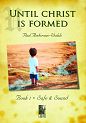
Our loving Father never even glances away from us, even for a moment. Psalm 139:3 says, "You scrutinize my path and my lying down, and are intimately acquainted with all my ways" (NAS). Look at the picture I've posted with this blog. That child can see only one thing - himself. He's so close to the eye that he can't even see the eye. He can only see his own reflection in the pupil of the eye.
Your Father is watching you. In Zechariah 2:8, our Father called His people, "the apple" of His eye. The word literally means "the pupil." Not only are you in your Father's sight. He is focused on you. He "scrutinizes" your lifestyle. That word means "to fan or to winnow." It's the picture of an ancient harvester throwing the wheat and chaff into the air to let the wind separate them so that the wheat could be harvested.
The winds of trouble may blow in, but your Father is watching you. He is using everything that comes into your life to produce a harvest in you and for you. In the midst of our trials, our Father is not far from us. To the contrary, He is often closer than we think. Look at that picture above again. Then relax. It's all good. That's a guarantee.
Thursday, September 23, 2010
Another Explanation of Objective & Subjective Reality
I know somebody who is extremely gifted. He has a charismatic personality, is intelligent and is very competent. He has the capacity to excel at almost anything he tries to accomplish in life. Nobody, and I mean nobody, who knows him would ever wonder if he lacks the confidence to reach any goals he ever set for himself.
But the problem is that he doesn't see himself that way. Instead, he lives with a nagging sense of insecurity that he hides well from others. Although he could reach great heights in life, he lives at a low level of achievement because of those underlying feelings of inferiority and insecurity.
Is he gifted? Could he accomplish anything? Yes! That is an absolute truth. It is what would accurately be called the "objective reality" of the situation.
Is he living out of that reality? No. He believes all the negative things that the recriminating voices in his own head whisper to him. He thinks that the truth is that he is a loser and that if people knew the real him, that's what they'd see. That is his "subjective reality."
What needs to happen in his life is that he needs to come alive to the truth - to the objective reality of who he really is. If that were to happen, his subjective reality would be changed to reflect the truth. He would stop living subjectively under the lie that holds him back and he would then be able to live up to the objective reality that has been true of him all along.
Objective reality is real whether we believe it or not. Subjective reality is what we perceive reality to be at a personal level, whether it's actually true or not. In the case of what Jesus did for us at the cross, the objective reality is that His finished work applies to every person on the planet. But until they believe it, their subjective reality will never reflect the truth - neither in this life nor the next.
But the problem is that he doesn't see himself that way. Instead, he lives with a nagging sense of insecurity that he hides well from others. Although he could reach great heights in life, he lives at a low level of achievement because of those underlying feelings of inferiority and insecurity.
Is he gifted? Could he accomplish anything? Yes! That is an absolute truth. It is what would accurately be called the "objective reality" of the situation.
Is he living out of that reality? No. He believes all the negative things that the recriminating voices in his own head whisper to him. He thinks that the truth is that he is a loser and that if people knew the real him, that's what they'd see. That is his "subjective reality."
What needs to happen in his life is that he needs to come alive to the truth - to the objective reality of who he really is. If that were to happen, his subjective reality would be changed to reflect the truth. He would stop living subjectively under the lie that holds him back and he would then be able to live up to the objective reality that has been true of him all along.
Objective reality is real whether we believe it or not. Subjective reality is what we perceive reality to be at a personal level, whether it's actually true or not. In the case of what Jesus did for us at the cross, the objective reality is that His finished work applies to every person on the planet. But until they believe it, their subjective reality will never reflect the truth - neither in this life nor the next.
Abandoning The Religious Rat Race
 Are you on the religious treadmill? Get off. You may find it gratifying in the short run but over the long haul it'll kill you. Driven religious fervor becomes a one night stand repeated over and over and over again. There may be a shallow gratification in one night stands, but nobody would ever mistake it for genuine intimacy. God offers you much more than that. He wants you to experience Him and all of His gifts as a natural part of the soothing rhythms of grace. However, to know that kind of intimacy, we must stop our religious hyperventilating, calm down, stop and smell the roses. God doesn’t need for you to break the three minute mile for Him. He just wants you to enjoy Him, knowing that everything else in your life will flow out of that.
Jesus didn’t come to help us be religious superstars. Far from it, He came to deliver us from empty religion, even orthodox, time honored religion. Jesus came to bring us into intimacy with God through Himself. In His earthly days, as in our day, those most offended by Him have been the religionists who have built their reputation around keeping their golden idols polished to a brighter shine than anybody else in town.
The idols are their own particular rules of the road that must be observed as we speed down the highway they call “Christian living.” Their display case is filled with the specific idols which most easily fit their own personality and temperament and they judge everybody else by whether or not they live up to their own personal standards. People are incidental. What matters is how you are behaving.
Even Jesus wasn’t a good churchman by the standards of the religionists of His day. He didn’t live up to what they thought He ought to be. To them, He had no convictions. He appeared to compromise the purity and integrity of their values by doing things like healing people on the Sabbath, by eating with the crooks (Publicans) and party-animals (sinners) of His day. He was a friend of the hookers and homeless. He didn’t separate Himself far enough from the riffraff, as every good churchman knew one should do. Consequently, He lost His testimony with the Pharisees, an incidental matter which didn’t seem to bother him at all. Jesus cared more about relationships than reputation. He still does.
A legitimate Christian lifestyle gently flows like water along a riverbank, refreshing all who happen to stumble upon our banks. It isn’t a flash flood of activity that honors God. He doesn’t lead us that way, but instead He has chosen to make “[us] lie down in green pastures. He leads [us] beside the still waters [where] He restores [our] soul” (Psalm 23).
Get off the religious treadmill and just put your eyes on Him. He will do "the rest" in you.
Tuesday, September 21, 2010
The Greatest Love Affair Ever
 One day while He walked the celestial halls, Jesus decided to observe the earth. In a far off remote place he found “you”. Humanity was cursed with the curse of Adam and there was nothing beautiful in us. But that did not matter to Him, “I only see you.”
And then suddenly, the arrow strikes. Jesus feels butterflies in His stomach and chills in His spine. A passion passes slowly through his heart and he sighs. This passion takes control of the moment. Even though you are not attractive, a desire to have you rises up in Him. He wants to own you for all eternity.
He waits for you with open arms. His life was aflame for you. From his eyes flowed a burning river that flooded his heart, which was dry with loneliness, because he wanted to submerge you in that very heart.
The Eternal Lover looked through the celestial window to hear the footsteps, conscious that they were your feet walking on the earthly streets. A smile was etched on His face and he said “That’s her! That’s her!” This is not a fairy tale or just a simple story. Jesus is in love with his beloved, the most beautiful of them all. It doesn’t matter if they tell Him that she is not worth it. He is blinded and totally attracted to her.
You are chosen as the person who awakens in Him a burning passion. When He falls in love with you He opens for you the secrets of His love. As you receive it, you are born again. Now you can hear in your heart the most romantic words “I am my beloveds, and He is mine!”
With His irresistible Spirit He touches our interior for the first time, taking us to the true light. In His time, He fills us with affection. We are accepted in His eyes and He softly saturates us with all that is He.
His love springs out like an exquisite bouquet of flowers, aromatic and exuberant that he gives to us through his life. The call of His love sunk into our being, His hands molded us. We are raised up to a place we never thought we would reach. Now we are light because of what He has done.
The force of His love inspires a song of love. We have been born in His love like the dawn is born from the night. The days continue passing, and an emotional Jesus, steps to the Father to express His desire.
“Father, I want to talk with you” Jesus says.
The Father responds, “I am here”
“Father I want to confess to you that I am in love, so in love that when I sit at the table and the angels serve our alphabet soup, I see her name written out.”
“Who is this privileged one?” responds His Father.
“She is on the earth. Father, I want to show her how much I am in love with her. May I have her? I want her for me, and only me!”
“Son, what are you willing to do for her?” His Father asked.
“I am willing to give my all!”
Although He existed in the form of God, did not regard equality with God a thing to be grasped, but emptied Himself, taking the form of a bond-servant, and being made in the likeness of men. Being found in appearance as a man, He humbled Himself by becoming obedient to the point of death, even death on a cross (Philippians 2:6-8).
Jesus is so in love with you that he left behind all of his privileges. In other words He left His throne, His majesty and His Gloria in Heaven (John 17:4),His position (John 5:30, Hebrews 5:8), His riches (2 Corinthians 8:9), His rights (Luke 22:27, Matthew 20:28) and the use of His Divine attributes (John 5:19, 8:28, and 14:10).
When Jesus emptied Himself of everything, it not only meant the voluntary restriction of His divine capabilities and privileges. It also meant the acceptance of suffering, of rejection, mistreatment, hate and the terrible death on the cross.
Even though he never stopped being completely divine, Jesus took up human nature with its temptations, humiliations and weaknesses, and yet “without sin” (Philippians 2:7-8 and Hebrews 4:15). Why did He do it? It was because He fell hopelessly in love with us. How much did He love us that he decided to leave everything for you?
Jesus stood before the table, telling His Father and all of the celestial beings “I want to get close to her through a new testament. I want to make a new covenant.”
Earthly courtship is just as important as the marriage. Why? Because the happiness of the marriage is determined by how successful the courtship is. A house built on a solid foundation will not fall easily. A field that is worked well, whose quality seeds are sown at the correct time will reap a fabulous harvest.
Dear readers, courtship is the stage in which we pass from “I” to “we,” from the reserved to the donation, from the singular freedom to the plural liberty, from the unknown to the known.
Some of the characteristics we look for in a courtship are: faithfulness, fidelity, purity, patience, friendship, generosity, sensitivity, among others. We also know that sometimes the courtship can be difficult with many struggles, but we can trust the person who is at our side. Jesus is our fiancé and He will counsel, help and accompany us during the entire courtship. Feel His loving heart and protective hand always. When the going is tough, His love is a great motivation and relief for all.
What a glorious vision our groom has! He is willing to show us the perfect courtship because He wants to have the desired person. He has decided to leap unheeded from His platform of love to His masterpiece to ask her to be His bride. Her invitation shines like the sun and its words are filled with truth.
“I want to pay an incalculable and indescribable price for her, a price no one has ever paid.” He said to His Father.
“What is the price you wish to pay.” His Father asked.
“My life! That will be my dowry.”
(This article is an excerpt from the book, God Enjoys You, by Gerardo Vazquez, Director for Grace Walk Latin America. Right now, the book is only available in Spanish, but hopefully that will change in the future!)
Friday, September 17, 2010
Resting in Abba's Arms
 It is amazing how the default setting in contemporary Christian culture tends to oppose the concept of rest when that is exactly what Jesus promised to give us. (See Matthew 11:28-30) Just as God called Israel to a land of rest, we are being called to that today. This concept requires a new mind set for most people today. We live in a society where people go on vacation with their cell phones and laptop computers. To rest in Christ, trusting Him to express His life through us sounds lazy and negligent after having lived in the wilderness of rigorous religion for such a long time. Many mistakenly think of rest as some sort of passivity, which it is not. Rest means to trust Jesus Christ as our Life-Source, depending upon Him to empower our actions with His strength and direction.
 As a legalist, the concept of rest was so foreign to me that I couldn’t comprehend it. I didn’t know rest was a gift from my Father. I thought it was a sin. I sincerely believed that the only time we would find complete rest was when we died and went to heaven. There was a verse I used to read at funeral services to give comfort to bereaved families. I would share Hebrews 4:10 with them: “For the one who has entered His rest has himself also rested from his works, as God did from His.”
When I shared this verse, I would tenderly point out that our beloved friend who had died “has now entered into God’s rest and ceased from his own labors.” I talked about how heaven is a place where there are no more struggles. It is a place where we simply rest in Christ and enjoy Him forever.
Entering into His rest and ceasing from our own works. It sounded like dying and going to heaven to me. Then one day I read the next verse in the passage — Hebrews 4:11 says, “Let us therefore be diligent to enter that rest, lest anyone fall down through following the example of disobedience.” What? Be diligent to enter that rest? Now I was in trouble. I had always taught that rest means dying. Now here I was being confronted with the verse that says to be diligent to enter that rest or else I would be disobedient to God. I knew I had better go back and reexamine that verse again and hope that my interpretation had been wrong or else I was in serious trouble! I didn’t know at the time that I had already died with Christ and was able to cease from my own works.
Life in Christ is certainly not a passive lifestyle but neither is it a lifestyle of religious hyperactivity either. It doesn't have to be one or the other. Resting in Him means that we live our lives knowing that He holds us safely in His arms and that His loving embrace carries us through every situation we face in life. Sometimes our lifestyles will involve external activity and at other times it will involve outward inactivity, but at all times we are enjoying His divine hug.
Jesus didn't just come to deliver us from sin. He also came to deliver us from the religious sweatshop that demands a never ending effort to measure up. The cross has hung a "Gone Out of Business" sign on the door or religion and has taken us all on a permanent vacation with our Triune God. So relax and enjoy your rest.
Tuesday, September 14, 2010
The Bible As A Barrier
 Jesus once said something to the Pharisees that sounds strange at first. The Pharisees were known for their knowledge of the Bible and had a reputation for their meticulous attention to doing what it says. A good Pharisee had much of the Old Testament Scripture committed to memory. They were recognized as authorities on the Bible.
It was to that group that Jesus said these words: "You diligently study the Scriptures because you think that by them you possess eternal life. These are the Scriptures that testify about me, yet you refuse to come to me to have life" (John 5:39-40). "You diligently study the Bible," Jesus said, but then He goes on to tell them how their Bible study had no productive value in their lives at all. "The Bible serves its purpose by bringing people into an intimate relationship to me, but you've missed that fact completely," is the point He was making.
To the Pharisee, studying the Bible was an end unto itself. They studied the Bible to know the Bible. It was the final authority on their faith and actions. The problem was that the Pharisees turned the Bible into a manual for living. Jesus minced no words in making it clear that they had become blinded to Him by their own Bible study.
It's a strange phenomenon but not one that has passed away with the decline of the religious sect called "the Pharisees." I grew up being taught that the group to which I belonged were "people of the Book." That's how we identified ourselves. I read the Bible to learn the Bible - to understand its content - to know how I was supposed to live. I used to say, "I live by the Bible."
It all sounds so right on the surface that it's impossible to see the flawed logic of such an approach apart from the Holy Spirit opening our eyes to our error. It is not your Father's intent that you live by the Bible. It never has been. Paul described the proper protocol for living when he said, "the life that I now live in the flesh, I live by the faith of the Son of God who loved me and gave Himself for me" (Galatians 2:20).
We are not to live by the Bible, but are intended to live by the life of the indwelling Christ. The Scripture can give us no life at all. "You think that by them you possess eternal life," Jesus told the Pharisees, clearly making that point that life doesn't come from the Bible but from Himself.
I know it's risky business to talk this way in the climate of the modern church. If you've been taught that the Bible is the pinnacle of your walk with the Father, then it may sound to you like I'm diminishing the Bible but I'm not. I'm exalting Jesus Christ. I believe the Bible but also think it's important to know what our Bible is intended to accomplish.
The Bible became a barrier between the Pharisees and Jesus because they thought that Scripture was to be their final destination. Many think the same today, but it's not. The Bible isn't our destination. It's a sign post, pointing us toward our Destination, which is Christ Jesus.
C.S. Lewis once described how that when he pointed toward something and said to his dog, "Look at that!" the dog didn't see what he was pointing at. Instead, his dog looked at the end of the index finger Lewis used to point. That's how many people have become with their Bible. They don't understand that it serves to point them to their God, not to itself.
As we read and study the Bible, let us pray that the Holy Spirit will open our eyes to see our Triune God and His love for us. If all we see are doctrines to be learned, Greek words to be parsed, church history to be understood and religious rules to be followed, we've missed the point altogether. The Bible isn't a text book. It's a photo album with pictures of Jesus on every page. Until we see Him in our Bibles, we haven't looked closely enough.
Sunday, September 12, 2010
You're Not Guilty Anymore!
This song fits perfectly with this week's "Sunday Preaching" broadcast. It's "You're Not Guilty Anymore" by Aaron Keyes. The lyrics are beneath the video. (Thanks to Beverly Daniel for making me aware of this song.)
Not Guilty Anymore
It doesn’t matter what you’ve done;
It doesn’t matter where you’re coming from
Doesn’t matter where you’ve been,
Hear me tell you I forgive
You’re not guilty anymore, you’re not filthy anymore,
I love you, mercy is yours
You’re not broken anymore, you’re not captive anymore,
I love you, mercy is yours
Can you believe that this is true, grace abundant I am giving you
Cleansing deeper than you know, all was paid for long ago
You’re not guilty anymore, you’re not filthy anymore,
I love you, mercy is yours
You’re not broken anymore, you’re not captive anymore,
I love you, mercy is yours
There is now therefore no condemnation for those who are in Jesus.
You’re not guilty anymore, you’re not filthy anymore,
I love you, mercy is yours
You’re not broken anymore, you’re not captive anymore,
I love you, mercy is yours
You are spotless
You are holy
You are faultless
You are whole
You are righteous
You are blameless
You are pardoned
You are mine!
You’re not guilty anymore, you’re not filthy anymore,
I love you, mercy is yours
You’re not broken anymore, you’re not captive anymore,
I love you, mercy is yours
Not Guilty Anymore
It doesn’t matter what you’ve done;
It doesn’t matter where you’re coming from
Doesn’t matter where you’ve been,
Hear me tell you I forgive
You’re not guilty anymore, you’re not filthy anymore,
I love you, mercy is yours
You’re not broken anymore, you’re not captive anymore,
I love you, mercy is yours
Can you believe that this is true, grace abundant I am giving you
Cleansing deeper than you know, all was paid for long ago
You’re not guilty anymore, you’re not filthy anymore,
I love you, mercy is yours
You’re not broken anymore, you’re not captive anymore,
I love you, mercy is yours
There is now therefore no condemnation for those who are in Jesus.
You’re not guilty anymore, you’re not filthy anymore,
I love you, mercy is yours
You’re not broken anymore, you’re not captive anymore,
I love you, mercy is yours
You are spotless
You are holy
You are faultless
You are whole
You are righteous
You are blameless
You are pardoned
You are mine!
You’re not guilty anymore, you’re not filthy anymore,
I love you, mercy is yours
You’re not broken anymore, you’re not captive anymore,
I love you, mercy is yours
Friday, September 10, 2010
Grace Versus Religion
 There's an interesting story in John 8 that shows just how low religion can sink. Jesus had been telling people about how He was the Light of the world and how that when they came to know the truth, they would be set free. As He showed them that it wasn't their religious background or affiliation that gave them status with God but that it would be their relationship to Him that mattered, the Jews began to become more and more angry. Tell a self-righteous person that his religious achievements don't impress God and you're setting yourself up for a fight.
 The first thing they did was to try to defend their connection to Abraham in an attempt to set forth their religious pedigree. Jesus plainly pointed out to them that their religious identification didn't seem to be making any difference in causing them to live a life of faith in God. "If your relationship to Abraham is such a big deal, why isn't it affecting the way you live?" Jesus asked in so many words. (See John 8:39)
That was all it took. Now, He had gone and insulted their self-righteous pride. Mess with a man's religious identity by telling him that God isn't impressed and that it's not doing him or, for that matter, anybody else any good and you're asking for trouble. The problem they faced was that they couldn't deny that what Jesus said was true. So they took the defensive strategy that religion always takes when cornered. They attacked the messenger.
"Oh yeah?" they chided. "Well, at least we weren't born of fornication!"(See John 8:41) Of course, they were referring to the fact that Mary, the mother of Jesus, wasn't married to Joseph when she conceived by the Holy Spirit. Their attempt was to shut Him up by trying to embarrass Jesus, even shame Him by pointing out what they believed to be a deficiency in Him.
Make no mistake about it - this weapon from hell is still often used against those who boldly stand for the truth of God's grace. Authentic grace and performance-based-religion are like baking soda and vinegar. Try to introduce grace to self-righteous pride and a reaction is sure to erupt. When the message you share is iron-clad (and the message of pure grace is biblically sound), don't be surprised when the attack is turned against you.
I've heard it all myself. I've been accused by some people of not believing the Bible, of trying to establish a denomination with myself as the leader, of founding a new cult (called McVeyism by this particular critic), of lacking credentials, of being arrogant, of merchandising the gospel. The list goes on. My two favorites are "How can that guy teach the message of Christ living through us when he's overweight?" and "Steve McVey is a liar with a bad haircut."
Then there are the internal accusations - the ones that have come into my mind through the years. Those are much more personal, cruel and painful, even though I know they aren't true. Have you heard those accusations in your own mind?
Whether the voices that seek to silence us are external or internal, we will do well to remember one thing. We are in good company when these kind of attacks come, for the Lord Jesus Himself faced such moments. If you continue reading in John 8, you'll see that they finally accuse Him of being demon possessed. (See verse 48). The enemy will stop at nothing in trying to silence anybody who proclaims the pure truth of God's love and grace in a world of self-righteousness.
We are in a battle in our efforts to spread the message of grace. It's not a battle with flesh and blood either. This is a revolution and revolutionaries are often fired upon. The reality is that it goes with the territory. Much is at stake and the enemy of our souls will not stand idly by while we advance the Kingdom of God by spreading His love and grace.
If you feel attacked, you're not alone. If you feel belittled at times, you're not alone. If you feel alone, you're not alone! Let's join our hearts and hands and stand strong. We aren't fighting for victory. We are fighting from Victory and He assures us that through Him we will prevail.
In the thick of the battle, hymn-writer and gospel preacher, Isaac Watts wrote these words three hundred years ago that still serve us well today. May they be an expression of our own hearts.
Am I a soldier of the cross,
A follower of the Lamb?
And shall I fear to own His cause
Or blush to speak His name?
Must I be carried to the skies
On flowery beds of ease?
While others fought to win the prize,
And sailed through bloody seas?
Are there no foes for me to face?
Must I not stem the flood?
Is this vile world a friend to grace,
To help me on to God?
Sure I must fight, if I would reign
Increase my courage, Lord!
I'll bear the toil, endure the pain,
Supported by Thy word.
Thy saints, in all this glorious war,
Shall conquer, though they die;
They view the triumph from afar,
And seize it with their eye.
When that illustrious day shall rise,
And all Thy armies shine
In robes of victory through the skies,
The glory shall be Thine.
Subscribe to:
Posts (Atom)




 Posts
Posts